Environment Class 20
THE CLASS STARTED WITH A BRIEF OVERVIEW OF THE PREVIOUS CLASS (05:20 PM)
ENVIRONMENTAL IMPACT ASSESSMENT (05:21 PM)
- It is a study to predict the effect of the proposed activity on the environment.
- It compares various alternatives for projects and seeks to identify the one which represents the best combination of economic and environmental costs and benefits.
- Benefits of EIA:
- Reduction of pollution.
- Protection of the environment.
- To protect the interests of the local community and tribal community.
- To prevent future conflicts.
- Prevention of disasters.
- To make the government accountable towards the people.
- Optimum resource utilisation.
- Reduction in the cost of projects.
- Prevention of internal conflicts.
- Principles to be used in EIA:
- Participation.
- Transparency.
- Accountability.
- Integrated Assessment.
- EIA Process:
- Stakeholders:
- Project Developer
- Assessment Agency.
- Affected community
- Decision-making authority.
-
- 1) Project Proposal:
- Its detailed report is to be prepared by the project developer and submitted to the government and assessment agency.
- 2) Screening:
- It determines whether the project requires EIA or not.
- 3) Scoping:
- It involves detailing the terms of reference for EIA.
- 4) Impact Analysis:
- It identifies and predicts the likely impacts of the proposed projects.
- It involves recommending mitigation to reduce and avoid adverse consequences.
- 5) Reporting:
- It involves preparing detailed reports to submit decision-making body as well as other interested parties along with environment management plans.
- 6) Review and Public Hearing:
- Review involves the affected community as well as decision-making authority.
- The community will be given an opportunity to make suggestions.
- 7) Approval and Decision making:
- In case of Approval conditions shall be prescribed.
- 8) Implementation and Followup:
- I.e. Post monitoring of the project once it is approved.
- EIA in India:
- In 1976-77, the Planning Commission asked the Department of Science and Technology to examine the river valley projects from an environmental angle.
- Till 1994, Environmental clearance from the central government was an administrative decision.
- In 1994, Based on the powers given under the Environment Protection Act, of 1986 the government promulgated EIA Notification which made environmental clearance mandatory for certain projects in India.
- EIA Notification 2006:
- It classifies developmental projects into two categories.
- 1) Category A:
- Projects requiring national level appraisal by impact assessment agency and expert appraisal committee.
- 2) Category B:
- Requiring appraisal at the state level from the State Impact Assessment Authority and State Expert Appraisal Committee.
- Category A Projects do not require Screening.
- In Category B Projects are divided into two:
- Project B1: EIA is Mandatory.
- Project B2: EIA not Mandatory
- Some projects that require Mandatory EIA are:
- Mining
- Thermal Power plants, etc.
- A draft EIA Notification to replace the 2006 Notification was issued in 2020 However, It was put on hold after wide criticism.

ENVIRONMENTAL ETHICS (06:08 PM)
- Anthropocentrism:
- It suggests that human beings are the most important living creatures and the other living beings assist in their survival.
- Non-Anthropocentrism:
- Which gives value to every living being in nature.
- Psychocentrism:
- It holds that human beings have more value in the environment because of better-developed mental capacity.
- Biocentrism:
- It gives importance to all living beings in the ecosystem.
- Deep Ecology:
- It believes that humans must conserve the ecology for the sake of its intrinsic value.
- We should radically change our relationship with nature from one that values nature solely for its usefulness to one that recognizes nature has an intrinsic value.
- Shallow Ecology:
- Environmental Conservation for the benefit of human beings alone.
- Social Ecology:
- Environmental conservation and studies the relationship between people and ecology.
EVOLUTION (06:25 PM)
- Charles Darwin wrote a book 'Theories on the Origin of Species by means of Natural Selection'
- The basic idea in it is evolution by Natural Selection.
- According to him, Every species adapts in the ecosystem.
- There is competition and various other conditions assist in the adaptation process.
- Geological Time Scale:
-

- Pre-Cambrian:
- The Last Universal Common Ancestor (LUCA) emerged in this time period.
- It was just feeding on the carbon compounds and later photosynthesis emerged.
- Through evolution LUCA led to the Blue Green Algae. (BGA)
- Then the emission of Oxygen increases for a brief period of time.
- Protozoa started emerging.
- Volvox emerged afterwards and then multicellular organisms started emerging forming a colony.
- First complex organisms with multicellular bodies, shapeless survive as single individuals but are made up of multiple small individual cells with the capacity to merge and reorganize at any time.
- Sponges started emerging
- Jelly Fish came into existence and it is the first organism to enter the deeper ocean and live on the ocean floor.
- It is the first organism with a nervous system and muscle fibres. In it, cells have no independent existence.
- Sea Anemone also emerged.
- Corals started emerging during this time period.
- Molluscs:
- Squids and Octopus were emerged.
- Cuttlefish can change colour to hide and to communicate messages.
- Orthropods:
- Orthropods have exoskeleton
- They mould their exoskeleton and regrow it.
- They have jointed appendages.
- They are the first animals to come on the land.
- Orthropods presently account for almost 80% of all animals.
- Trilobite were also among the earliest species.
- Centipedes and Millipedes emerged.
- Insects are also anthropods.
- Three Body Parts:
- Head
- Thorax
- Abdomen
- Insects are the largest orthropod group.
- Insects are the first organisms to fly like Dragonfly.
- Usually insects have either one pair or two pairs of wings, The Antenna is a sensory organ.
- Crab, Lobster, Shrimp emerged.
- Ordovician Time Period:
- Vertebrates:
- The first vertebrate to evolve was proto-fish.
- Cartilaginous and Bony fish evolved.
- Earth has seen five mass extinctions.
- At the end of the Ordovician first mass extinction happened.
- Silurian Time Period:
- The arrival of plants is a characteristic feature of it.
- In the start, Algae, Bryophytes, and others started emerging, and then vascular plants came up.
- The lignin development helped to grow the longer and stronger plants.
- Devonian Time Period:
- Amphibians started evolving in this time period.
- Amphibians are mostly cold-blooded, their skin is permeable and they practice external fertilization.
- The second mass extinction occurs at the end of Devonian time.
- Carboniferous Time Period:
- Pangia started to develop.
- Gymnosperm plants started.
- Reptiles emerged during this time period.
- Reptiles were capable of laying eggs with shells.
- Tough outer layer and tough skin.
- Reptiles are cold-blooded.
- They are vulnerable to temperature fluctuations, Crocodiles, etc.
- The Third Mass extinction came at this time, In terms of the percentages it was the largest mass extinction.
- It happened due to large-scale volcanic eruptions and a 10-degree rise in temperature.
- After the Triassic time period fourth mass extinction happened.
- Dinosaurs survived the fourth mass extinction.
- The legs of the reptiles were just below the body.
- Jurassic-Cretaceous Time Period:
- The emergence of Angiosperm plants.
- The colourful flowers emerged during this time due to the presence of insects.
- The animal diversity exceeded the plant diversity.
- Mammals were also evolved during this time.
- Platypus, as well as Koala bears, bats, and dolphins, are mammals.
- The Fifth Mass Extinction due to a large hit of meteorite and large-scale volcanic activity.
- Apes started evolving and after diversifying Homo sapiens emerged.
- Characteristics of Apes:
- Capacity to walk upright.
- Larger brain size.
- Facial expressions and tool-making abilities as well as communication skills.
- The capacity to store the knowledge and transfer it to the next group is a unique aspect of humans.
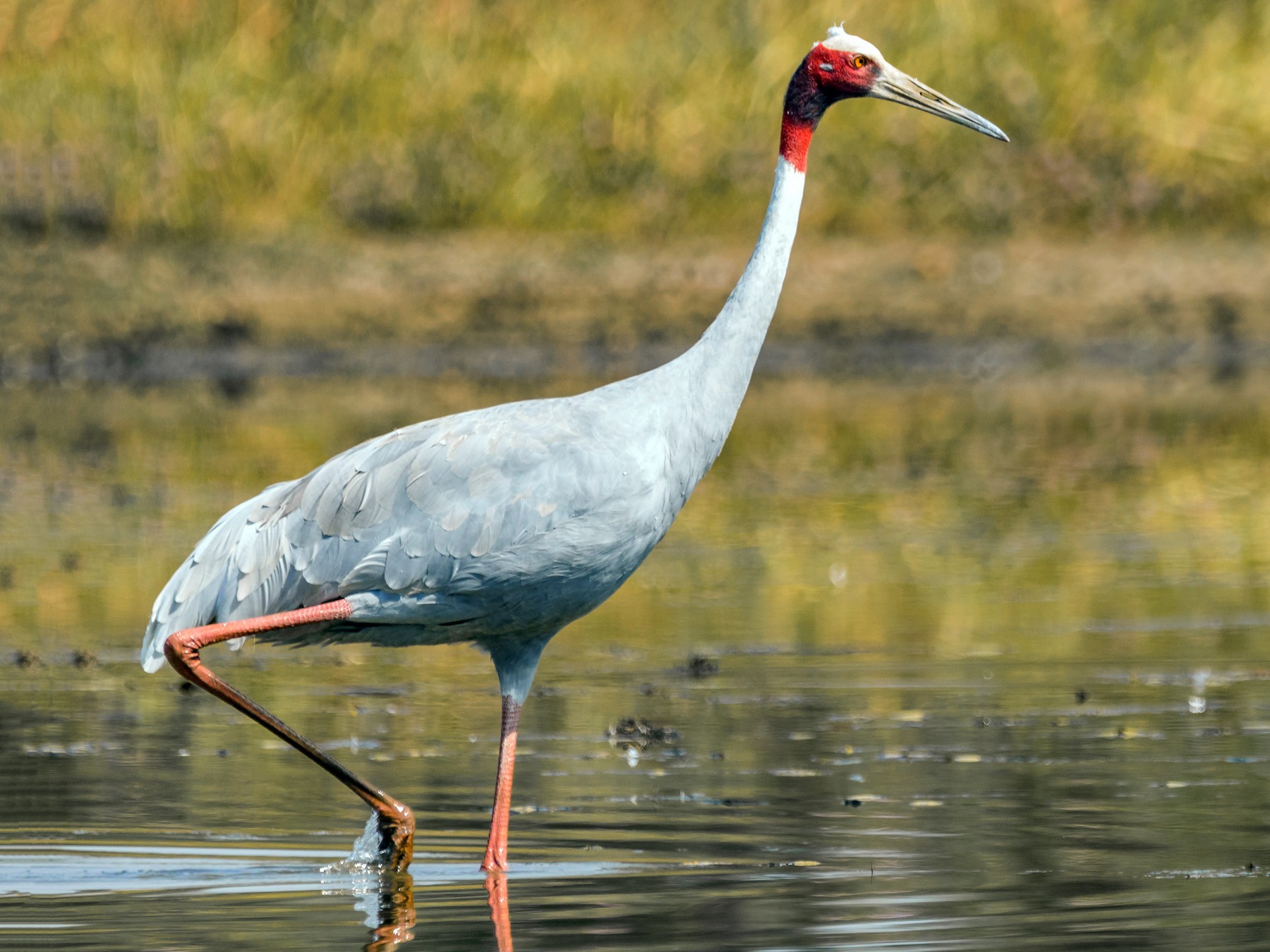
WILDLIFE: SARUS CRAIN (08:31 PM)
-
- It is the state bird of Uttar Pradesh.
- Habitat: Marshland.
- IUCN Status: Vulnerable.
WILDLIFE: TURTLES (08:33 PM)
-

- Largest is Leatherback Sea Turtle.
- Olive Ridley Sea Turtle: Found near Great Nicobar
- Kemps Ridley Sea Turtle and Flatback Sea Turtles we did not find in India.
- Other turtles:
- Hawksbill Sea Turtle.
- Loggerhead sea Turtle.
- Green Sea Turtle.
- Arribada is a place where mass nesting of olive ridley turtles happens.
- Mass nesting also happens on the Mexican coast.
- Initiatives for Olive Ridley Turtles:
- Operation Oliva: To provide safe passage to Olive Ridley Turtle.
- Operation Save Kurma: Implemented by Wildlife Crime Control Bureau.
- Sea Turtle Project: Implemented by WII.
WILDLIFE: CROCODILES (08:40 PM)
-
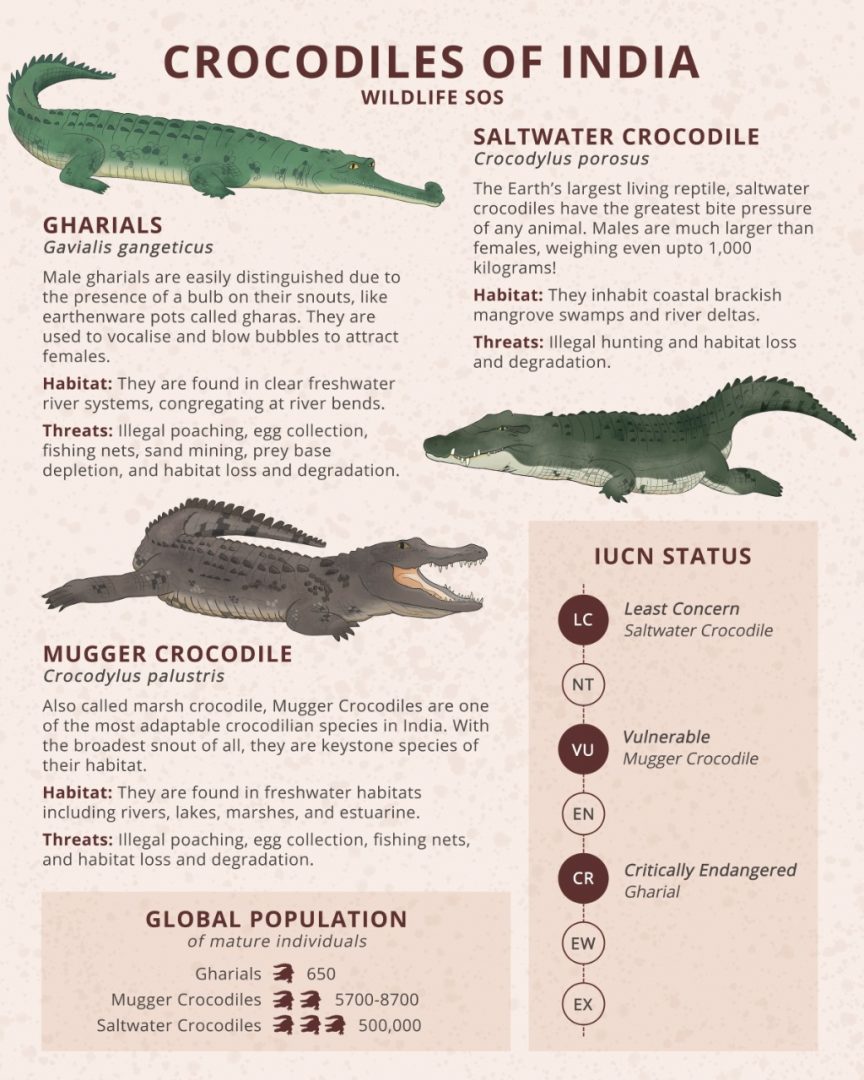
- Three types of Crocodiles:
- 1) Gharial: Critically Endangered.
- Mainly found in Chambal
- 2) Mugger: Vulnerable
- Fresh water crocodiles found throughout India.
- 3) Salt Water Crocodile: Least Concerned
- Chilka Lake, Andaman and Nicobar.
WILDLIFE: GANGETIC RIVER DOLPHINE (08:42 PM)
-
- They live in freshwater rivers.
- It is found in Ganga and Bramhaputra
- India, Bangladesh and Nepal
- IUCN Status: Endangered
- It is National Aquatic Animal.
- Apart from this Indus River Dolphin is also found in Beas and other rivers.
- Irrawaddy dolphins are found in Chilka Lake and Sundarban areas.
- Ganges River Dolphin named as Susu.
- Indus River Dolphin is Bhulan
- River Dolphine of Amazon is Botos.
WILDLIFE: VULTURES (08:45 PM)
- They are scavengers and their numbers are declining due to the heavy use of Diclofenac in the cattle.
- There are 9 species of vultures in India:
- Critically Endangered Vultures:
- 1) Red-headed Vultures
- 2) White-backed Vulture
- 3) Slender-billed Vulture
- 4) Indian Vulture also called Long Billed Vulture.
- Conservations Efforts:
- Vulture Action Plan
- Vulture Safe Zone
WILDLIFE: MAHSEER (08:50 PM)
- 1) Golden Mahseer:
-

- IUCN Status: Endangered
- Found in Himalayan rivers
- 2) Blue Finned Mahseer:
-
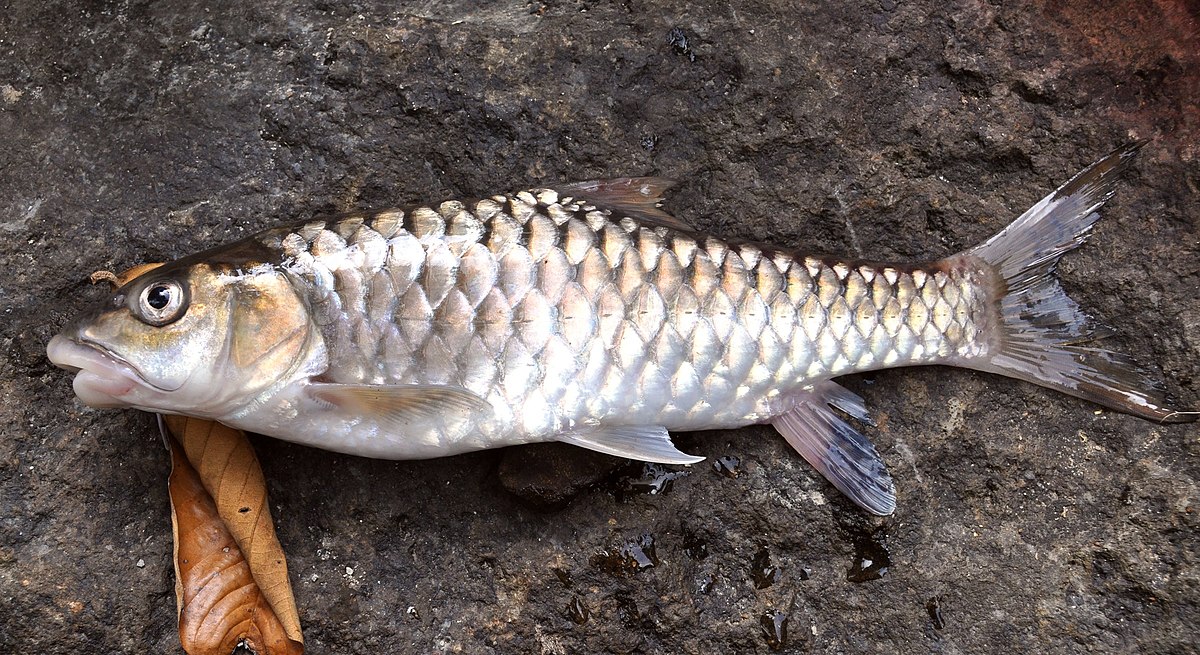
- IUCN Status: Least Concerned.
- 3) Humped-backed Mahseer:
- Critically Endangered.
- It is also called Tiger Fish mostly found in the Cauvery River and its tributaries.
WILDLIFE: COMMON BIRDS (08:52 PM)
- Black drongo (Jungal Kotwal)
- Bulbul
- Cormorant: Live around Water bodies
- Snake Bird: (Indian Darter)
- Grey Heron
- Indian Pond Heron
- Indian Roller
- Jungle Babbler (Seven Sisters) (They live around in groups of seven)
- Painted Stork
- Plum-headed Parakeet.
- Purple Sunbird.
- Robin.
- Shikhara
- Sparrow
- Spot Billed Duck
THE SYLLABUS FOR THE ENVIRONMENT IS COMPLETED.